SOFTWARE SOLUTIONS
LOCAL GOVERNMENT EDITION
Software Functionality (Introspect Business Suite 2006)
- Full stakeholder system for maintaining information on all people and organizations involved with the Local Government.
- Storing of all customers, suppliers, divisions, partnerships.
- Support for basic HR tracking including: employees, employers, employments, reporting structures, organizational structures (organograms) and job positions. Job skills can also be listed.
- Full security and access control.
- Tracking of projects, audits, reviews, meetings, tasks and messages.
- Tracking of quality issues including customer complaints, NCR (Non-conformance reports) CAR (Corrective Action Reports) and PAR (Preventative Action Reports)
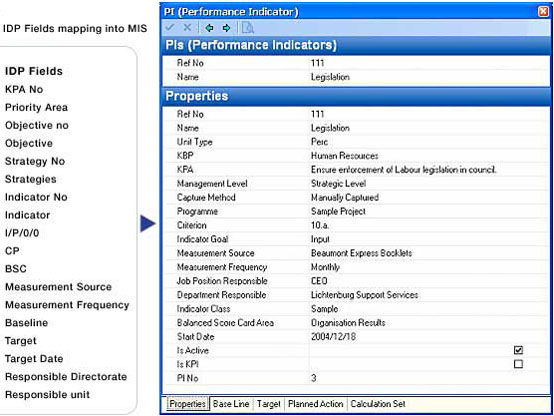
- IDP automation including electronic IDP with Balanced Scorecard and/or SAEM (South African Excellence Model) integration.
- Listing of KBP (Key Business Processes/Clusters), Objectives, Strategies, Projects, Programmes, KPAs (Key Performance Areas), KPIs (Key Performance Indicators) and Strategic Actionable Tasks.
- Regular PI (Performance indicators) for tracking other indicators that are needed to calculate KPIs. E.g. Number of possible street lights and Number of operational street lights needed to be tracked to calculate the KPI Increase in operational street lights (in %)
- Capture related information against the KPI including:
- Type of indicators, including Input, Output and Outcome indicators.
- Baseline
- Targets
- Budgets
- Department and Job Position Responsible
- Actionable Tasks
- Balanced Score Card Perspective / SAEM Criterion
- Required Timing
- Generation of Tasks into trackable (for monitoring) items with notifications and reminders.
- Monthly capture mechanisms for KPIs. Calculable KPIs.
- Support for the 7 national indicators.
- Support for Individual Performance Management and Performance Agreements of the section 57 individuals.
- Support for all phases of PMS, including Planning, Monitoring, Measuring, Reviewing, Reporting, Auditing and Quality Control and improving Performance.
- Support for Batho Pele principles
|
New Functionality:
Support for
SDBIPs
Budgets split into Monthly amounts
Support for target to be split monthly or Quarterly
Tracking Wards
Targets/Budgets across Wards.
New Reports based on SDBIPs
|
 |
Basic Information on Strategy
Definition of IDP: This is a process by which municipalities prepare a 5-year strategic plan that is reviewed annually, in consultation with communities and stakeholders. The plan adopts an implementation approach. It seeks to promote integration by balancing social, economic and ecological pillars of sustainability, without compromising the institutional capacity required by implementation, which includes co-ordinating actions across sectors and spheres of government.
Definition of PIs: These are qualitative and quantitative measures relating to a particular aspect of utilities performance or standard of service. It is an indicator of the success of a government or corporate program.
Definition of KPIs: These are financial or non-financial metrics used to reflect the critical success factors of an organisation.
The Role of Strategy: Strategy is the direction and scope of an organisation over the long term. Through its configuration of the resource’s environment to meet the needs of markets and to fulfil stakeholder expectations, strategy attempts to secure advantages for the organisation. Therefore, strategy consists of competitive moves and business approaches to produce successful performance.
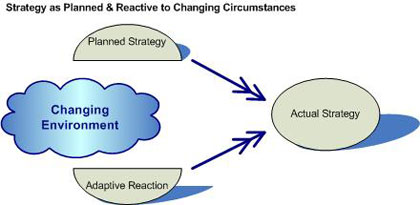
The first strategic action that the organisation must perform is to set objectives. Objectives are targeted results and outcomes; they are goals redrafted to state performances in terms that are clearly tangible to the reader. When writing objectives you need to be sure to describe the intended end-result rather than the process of achieving that end-result. Objectives must be challenging but measurable. Therefore, set clear and understandable objectives.
The purpose of setting objectives is to:
• Convert the organisation’s mission into performance targets
• Create yardsticks to performance
Strategies are then used to achieve these outcomes (objectives).
There are three phases of strategic management:
1. Strategy formulation
2. Strategy implementation
3. Strategy evaluation
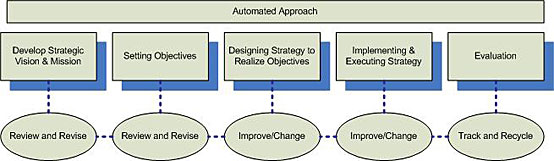
Developing a strategy is critical for any organization, yet it is equally important to have a mechanism that translates the strategy into action. Developing strategy is the act of aligning operations and improvements with business goals and objectives. Your strategy should give you a competitive advantage over other companies.
When developing a strategy, an organisation needs to follow these five steps:
- Define the business, state the mission and form a strategic vision (Strategy formulation)
- Set measurable objectives
- Craft a strategy to achieve objectives
- Implement and execute your strategy
- Evaluate the performance, review new developments and initiate corrective adjustments to your strategy.
A strategy that is not implemented is as good as no strategy at all, therefore after formulating your strategy you need to implement it within your organisation. Strategy implementation is the process whereby the formulated strategy is put into action. Strategy implementation is an internal, operations-driven activity which involves organising, budgeting, motivation, culture-building, supervising and leading to make the strategy work as intended! After the strategy has been implemented the organisation needs to evaluate its performance, to observe where the strategy did not perform successfully. This will help the organisation to redesign the strategy by correcting its previous failures.
IDP into Action
Strategy into Action
Strategy into action! Management spends a weekend away strategizing for the next quarter. A number of actions/tasks are formulated. The issue is: how to ensure that the actions are carried out on time and by the persons responsible? Report back at the next quarterly strategy review a nightmare? The Introspect – Strategy into Action manages strategies by raising tasks on the dates or periods agreed upon. The persons responsible for carrying out the tasks are reminded via e mail. Escalation takes place on overdue tasks. Close out is necessary. Reports and graphs are available.
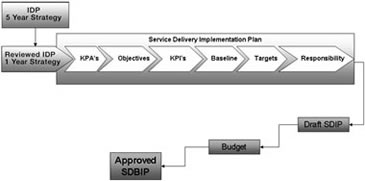
Tracking SDBIP
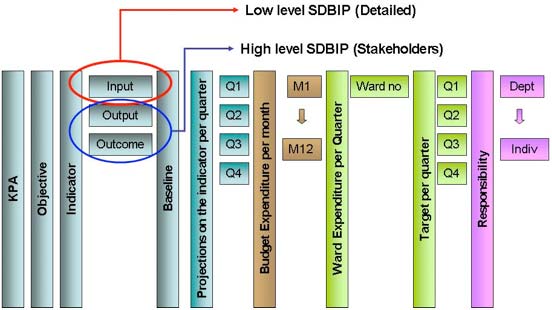
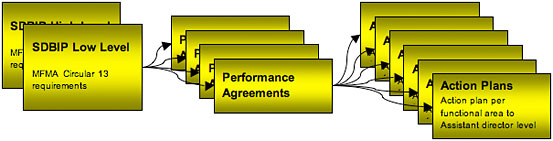
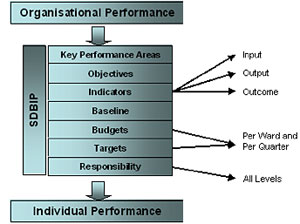 The SDBIP is the strategic service delivery implementation plan of the council and quarterly reports on the SDBIP must serve before the Audit Committee and Council to inform progress to date to all stakeholders. From the SDBIP, performance plans will be developed for each Department in the Municipality. Fantus Technologies will draft performance agreements for the Municipal Manager and direct reports, and build all indicators into the performance plans and agreements. The SDBIP is the strategic service delivery implementation plan of the council and quarterly reports on the SDBIP must serve before the Audit Committee and Council to inform progress to date to all stakeholders. From the SDBIP, performance plans will be developed for each Department in the Municipality. Fantus Technologies will draft performance agreements for the Municipal Manager and direct reports, and build all indicators into the performance plans and agreements.
The product will be performance indicators, easily measurable for the municipality that includes the requirements of the IDP, national indicators, setting of baseline information and related requirements of legislation and the Municipality.
FantusTechnologies develops and revises a performance management framework as required by legislation for all Local Authorities. The framework is, in effect, the guiding policy document on Performance managent and consists of the following sections:
1. INTRODUCTION
2. THE PREFORMANCE MANAGEMENT PROCESS
- Delegations, responsibilities and internal institutional arrangements
- The performance management system
- The performance management process
- Adoption of a performance management system
3. IMPLEMENTATION OF PERFORMANCE MANAGEMENT
- Planning for performance
- Prioritisation, objectives and strategies
- Development of an SDBIP
- Monitoring and evaluation
- Performance review procedure
- Consequences of the performance rating, poor performance
- Performance appraisal process
- The grievance procedure
- Reporting on performance
- Reporting schedule
- Audit of performance measurements.
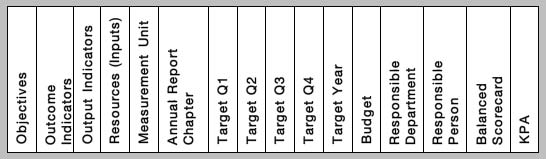
Example of SDBIP Format:
Development of the Performance Agreements
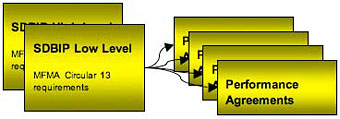
Performance agreements will be drafted form the SDBIP for each section 57.
The performance agreements will be in line with the Performance management regulations as applicable from August 2006.
Development of the Action Plans
Action plans with monthly/quarterly reporting templates will be developed for all responsible areas and positions in the SDBIP. The plans and templates will be used for the collation of information on progress on the SDBIP that will lead into information in the Performance Management System. All high level information will be used for performance appraisal.
|